
 EN
EN  English
 中文简体
中文简体
Yaokang Technology
Yaokang Technology
Yaokang Technology
Yaokang Technology
Industry News
Evaluating Stainless Steel Float Ball Performance
Importance of Temperature and Pressure Assessment
A Stainless Steel Float Ball is widely used in liquid level control systems due to its corrosion resistance and durability. A reliable Stainless Steel Float Ball Factory emphasizes evaluating operating conditions, especially temperature and pressure, to ensure long-term performance. Understanding these factors helps prevent deformation, leakage, and mechanical failure.
- Temperature effects: High or low temperatures can affect metal expansion, valve response, and sealing performance.
- Pressure impact: Excessive pressure may deform the float, affect buoyancy, or damage connected valves.
- Safety and reliability: Correct assessment ensures consistent operation under variable conditions.
Careful evaluation reduces the risk of system failure in industrial and residential applications.
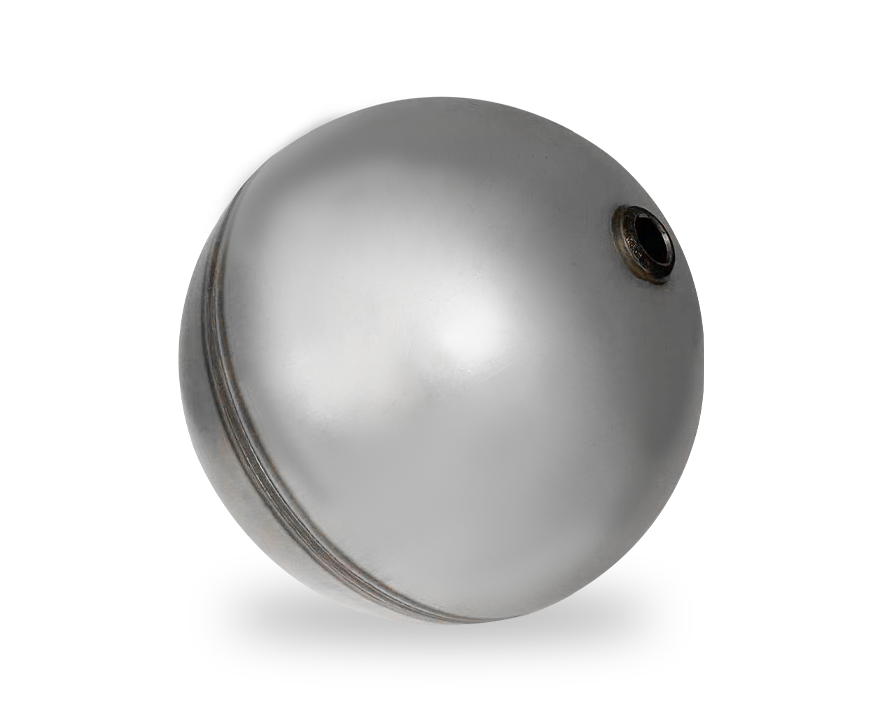
Material Properties Under Temperature Variations
Stainless steel is known for its thermal stability, but different grades and designs behave differently under extreme conditions.
- Thermal expansion: Stainless steel expands slightly with heat, which may influence float movement.
- Low-temperature brittleness: Certain grades may become less ductile in extremely cold environments.
- Surface coatings and finishes: Polished or passivated surfaces reduce scaling and maintain buoyancy even under temperature fluctuations.
Selecting the appropriate stainless steel grade is critical for systems exposed to wide temperature ranges.
Pressure Tolerance and Structural Integrity
Operating pressure directly affects the performance of a stainless steel float ball.
- Working pressure: Each float ball is rated to handle a specific pressure without deformation.
- Valve interaction: High pressure may cause the connected float valve to leak or respond slowly.
- Safety margin: Engineers typically choose a float ball rated 20–30% higher than the expected system pressure to prevent failure.
Proper pressure evaluation ensures the float maintains proper buoyancy and valve control.
Testing and Simulation Methods
A professional Stainless Steel Float Ball Factory often performs rigorous testing to evaluate temperature and pressure performance.
- Hydrostatic tests: Simulate pressure conditions to ensure structural integrity.
- Thermal cycling: Exposes the float to repeated heating and cooling to check for expansion, contraction, and material fatigue.
- Corrosion resistance tests: Assess performance under temperature-induced chemical changes, such as in hot water or steam applications.
These tests help determine safe operating limits for different applications.
Application-Based Evaluation
Different industries impose unique temperature and pressure requirements.
- Hot water tanks and boilers: Require floats resistant to high temperature and moderate pressure.
- Industrial chemical tanks: May combine elevated pressure with corrosive liquids, demanding precise material selection.
- Cryogenic or cold storage systems: Need floats that retain mechanical strength at subzero temperatures.
Evaluating environmental conditions ensures suitable float performance and prevents costly downtime.
Installation and Maintenance Considerations
Even with proper material selection, installation, and maintenance, the suitability is affected under varying conditions.
- Proper alignment: Prevents binding or contact with tank walls, which could amplify pressure stress.
- Regular inspection: Checks for dents, corrosion, or deformation caused by extreme temperatures or pressure spikes.
- Valve calibration: Ensures the float’s movement corresponds accurately to the target liquid level under different operating scenarios.
Routine maintenance extends the float’s life and maintains reliable control.
Evaluating a Stainless Steel Float Ball under varying temperature and pressure conditions is essential for reliable liquid level control. Material properties, structural design, and safety margins all influence performance. By combining proper grade selection, rigorous testing, and careful installation, systems can operate efficiently across a wide range of conditions. Collaborating with a reputable Stainless Steel Float Ball Factory ensures that components meet stringent standards, providing durability, safety, and consistent performance in diverse industrial and residential applications.
Our Main Products



Contact Us
* We assure you that we will never divulge your privacy.

Quick Links
Product
Head Office
Room 201, Building 5, Yongjia Yulong Shoes Clothing Technology Innovation Micro Park, Oubei Street, Yongjia County, Wenzhou City, Zhejiang Province
Phone: +86-577-67329891
Tel: + 86-13868641338 / 13858813335
Fax: + 86-577-67329892
E-mail: [email protected]
Copyright © Yongjia County Yaokang Technology Co., Ltd.
Stainless Steel Float Ball Manufacturer
