
 EN
EN  English
 中文简体
中文简体
Yaokang Technology
Yaokang Technology
Yaokang Technology
Yaokang Technology
Industry News
How Does Water Level Float Ball Control Tank Water Stability
Water inside a tank looks calm most of the time, yet the level is always moving in small ways. Filling brings it up, daily use pulls it down, and in between there are small shifts that come from pressure changes and flow variation. In many setups, those changes do not follow a steady pattern, so the level can drift away from what is actually needed.
When there is no control part in the system, the tank depends on people noticing and reacting. That usually does not happen at the exact moment it is needed. Water keeps entering while nobody is watching, or the supply drops lower than expected before refill begins. Over time, these small gaps turn into overflow or shortage situations.
A Water Level Float Ball sits inside that environment and reacts directly to the water surface. Nothing digital, nothing calculated. It simply moves with the water. That movement becomes the trigger for controlling how much water enters the tank.
In real use, the expectation is not complicated:
- water comes in when level is low
- water stops when level is high enough
- changes happen without constant attention
- system keeps working without outside control
The whole idea is to let the tank manage itself through physical movement instead of manual checking.
How Float Ball Stays Linked to Water Surface Movement
A Water Level Float Ball rests on the surface of the water, so every rise or drop in level is immediately reflected in its position. There is no delay between what happens in the tank and how the float responds. If water drops a little, the float drops with it. If water rises, the float lifts in the same moment.
That simple contact creates a kind of loop. Water moves, float follows, and that movement is passed into the control part of the system. Nothing is separated into steps. Everything happens in the same space.
Unlike sensor-based systems that read data and then send signals, the float does not “measure” in a separate way. It just stays in the water and reacts directly.
A simple way to picture it:
| Water Level Change | Float Position | What Happens Next |
|---|---|---|
| Level goes down | Float lowers | Inlet begins opening |
| Level goes up | Float rises | Inlet starts closing |
| Level stays steady | Float holds position | Flow stays balanced |
What makes this interesting is not speed or precision, but continuity. The adjustment never really stops as long as water is moving.
How the Mechanical Link Turns Float Movement Into Water Control
Inside the system, the Water Level Float Ball connects to a lever or arm that reaches the inlet valve. That connection is what turns simple up-and-down movement into actual water control.
When water level drops, the float sinks slightly. That downward motion pulls the lever in a way that opens the valve. Water starts entering the tank again. As water comes back in, the float rises slowly and pushes the lever back toward a closing position.
The movement is not a sudden switch. It is more like a gradual shift where the valve opens or closes little by little depending on where the float sits.
The sequence usually feels like this:
- water level falls → float drops → valve opens
- water flows in → level slowly rises
- float lifts → valve starts closing
- level stabilizes → flow reduces or stops
Everything depends on that simple mechanical link. No timing device, no external input. Just movement transferred through a lever.
How Overflow Control Happens Without Any Electrical System
Overflow is one of the most common issues in water storage systems. It usually happens when inflow continues after the tank has already reached a safe level. The Water Level Float Ball handles this through position rather than timing.
As the tank fills, the float rises with the water. When it gets close to the upper space of the tank, the lever starts pushing against the valve more strongly. That pressure slowly reduces how much water can enter.
It does not stop all at once. The flow narrows step by step until it finally shuts off when the float reaches its upper position.
What happens during that process:
- float rises with water level
- lever pressure increases gradually
- valve opening becomes smaller
- water flow reduces naturally
- final position stops inflow
This gradual closing is important because it avoids sudden pressure changes in the pipeline, which can otherwise affect the stability of the system.
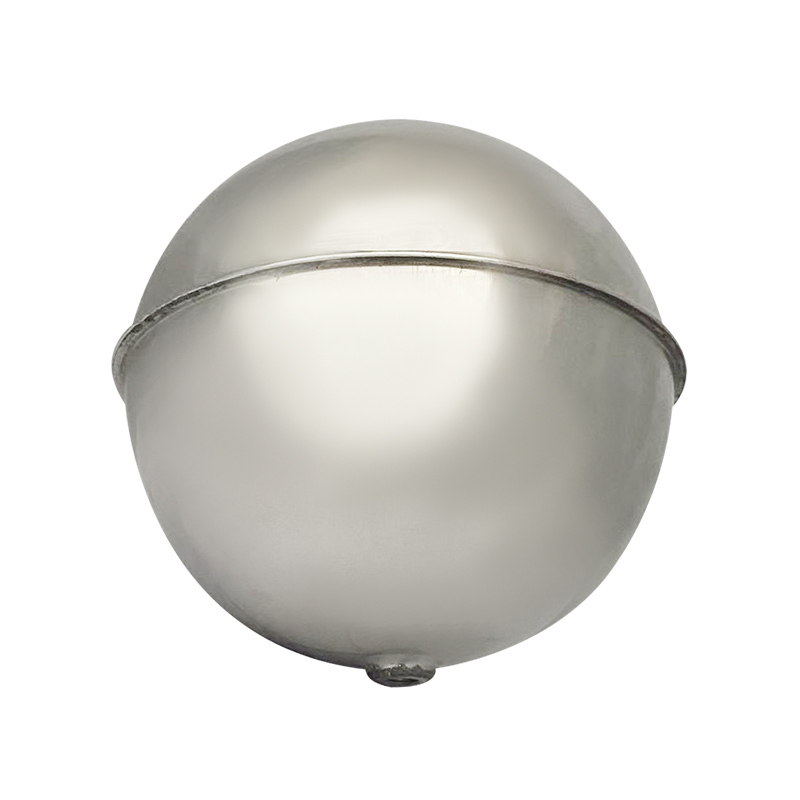
Why Buoyancy Becomes the Core Driver of the System
Everything in a Float Ball system depends on buoyancy. It is the simple force that makes the float rise and fall with water level. When water increases, upward force pushes the float up. When water decreases, that support reduces and the float drops.
There is no external power involved. No signal, no calculation. Just physical reaction between object and water.
What makes buoyancy practical in this setup is its consistency. As long as the water is present, the force is present. That means the system keeps adjusting itself without needing reset or input.
Key points of this behavior:
- reacts directly to water level change
- works continuously without interruption
- does not depend on electricity or control units
- adjusts in small steps rather than sudden jumps
It is a simple physical relationship, but it is enough to keep a tank stable over long periods of use.
How Do Tank Conditions Change the Way Water Level Float Ball Moves
Inside a real tank, water is rarely calm for long stretches. Filling brings pressure from one direction, usage pulls the level down unevenly, and sometimes both happen close together. Under those conditions, the Float Ball does not move in a clean straight line. It reacts to surface shifts, small ripples, and pressure changes around the inlet.
In narrow tanks, movement tends to feel quicker because the water level changes over a shorter distance. The float reacts almost immediately, yet the motion can feel slightly more sensitive to inflow bursts. In wider tanks, the surface spreads movement out, so the float rises and falls in a calmer rhythm.
Depth also plays a quiet role. A deeper tank gives the float more vertical space before reaching the valve limit, which can soften how quickly the system responds at the upper range. When inflow is strong, turbulence near the inlet may push the float slightly off balance for a moment, yet the lever system usually brings it back into position through continuous correction.
Typical influences inside real usage:
- inflow pressure near inlet area
- surface disturbance during filling
- tank width affecting movement spread
- depth changing response range
Even with these variations, the float keeps working through the same simple motion pattern, adjusting step by step rather than relying on fixed points.
What Kind of Role Does Water Level Float Ball Manufacturer Play in Real Operation
A Water Level Float Ball looks simple from the outside, yet small differences in production can change how it behaves inside a tank. Shape balance, wall thickness, and lever connection accuracy all influence how smoothly it responds to water level movement.
If the float is slightly uneven, one side may lift earlier than the other, which can make movement less stable. If the lever joint is not aligned properly, the motion can feel stiff or slightly delayed. These details are not obvious during installation, but they show up after repeated cycles of filling and draining.
Material choice also matters more than it first appears. A surface that holds up well under long water contact tends to keep movement smoother over time, while weaker material can slowly affect buoyancy behavior.
Key points linked to manufacturing quality:
- balance of float body shape
- smoothness of lever connection
- resistance of material to long water exposure
- consistency between production batches
| Manufacturing Detail | What It Affects in Use | Visible Behavior in Tank |
|---|---|---|
| Float balance | Sensitivity of rise/fall | Slight timing differences |
| Lever alignment | Movement smoothness | Stable or uneven response |
| Material stability | Long-term buoyancy | Gradual performance shift |
| Assembly precision | Flow control timing | Consistency of shutoff |
Over time, these small factors decide whether the system feels steady or slightly irregular during everyday water use.
What Happens After Long-Term Continuous Use
A Water Level Float Ball system does not stay exactly the same forever. Every cycle of filling and draining adds a small amount of mechanical wear. Most of it is gradual and not noticeable at the beginning, yet it builds up across long use.
The lever connection can slowly lose some of its smoothness, especially if water carries small particles that settle around moving parts. The float surface may also develop a light layer from minerals in the water, which slightly changes how it sits on the surface.
These changes do not usually stop the system, but they can make response feel less sharp compared to earlier operation. Water level adjustment may become slightly slower or less sensitive in certain conditions.
Common long-term shifts include:
- slower float reaction to small level changes
- slight resistance in lever movement
- reduced sensitivity near upper water level
- buildup affecting smooth buoyancy movement
Even with these changes, the system continues to function because the core mechanism is purely mechanical. As long as the float can still rise and fall with water, control continues through the same physical link.
How Water Level Float Ball Fits Into Everyday Water Storage Use
Across different water storage setups, the Float Ball keeps a very direct role. It does not require power, wiring, or external control units. Once installed, it simply follows water movement and adjusts inflow through the valve connection.
In household tanks, it helps keep water from spilling over during filling. In agricultural storage, it supports steady refill without constant monitoring. In small industrial tanks, it reduces the need for manual checking during repeated usage cycles.
What makes it practical is not complexity, but the opposite. The system continues working through a basic movement pattern that does not depend on timing or external signals.
Typical usage environments:
- home water storage tanks
- irrigation and farm reservoirs
- auxiliary water containers
- small-scale industrial storage systems
The same simple motion repeats in all of them: water rises, float lifts, flow slows; water drops, float lowers, flow opens again.
Our Main Products



Contact Us
* We assure you that we will never divulge your privacy.

Quick Links
Product
Head Office
Room 201, Building 5, Yongjia Yulong Shoes Clothing Technology Innovation Micro Park, Oubei Street, Yongjia County, Wenzhou City, Zhejiang Province
Phone: +86-577-67329891
Tel: + 86-13868641338 / 13858813335
Fax: + 86-577-67329892
E-mail: [email protected]
Copyright © Yongjia County Yaokang Technology Co., Ltd.
Stainless Steel Float Ball Manufacturer
