
 EN
EN  English
 中文简体
中文简体
Yaokang Technology
Yaokang Technology
Yaokang Technology
Yaokang Technology
Industry News
How Thickness Float Balls in High-Temperature Pressure Environments
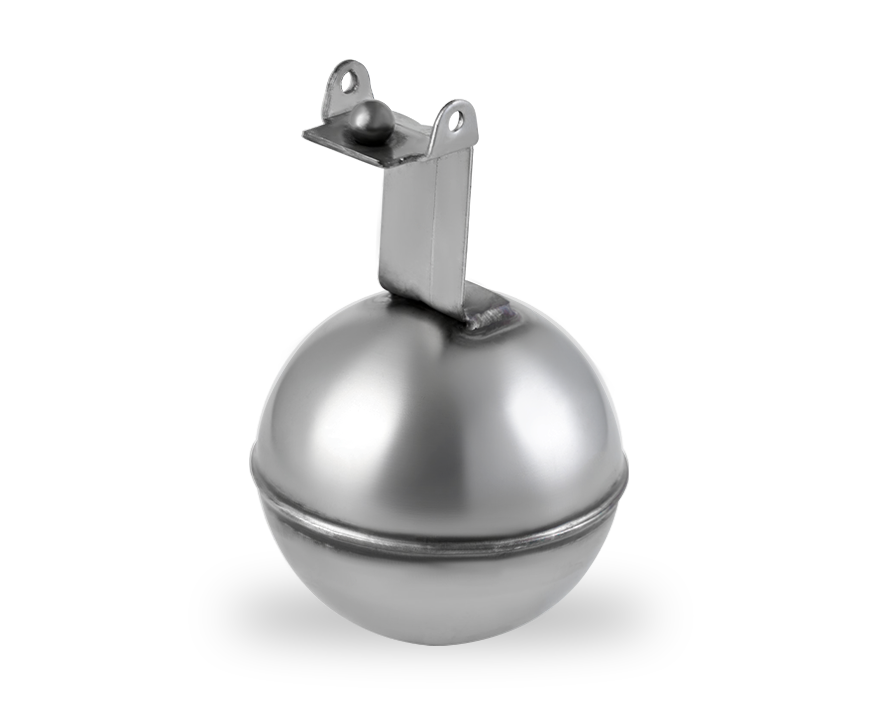
In many industrial applications, such as steam systems, chemical storage tanks, and high-pressure boilers, float balls play an essential role in maintaining accurate liquid level control. According to professional insights from several Float Ball Factory engineers, one of the critical design considerations for these components is their ability to resist deformation under extreme conditions. The wall thickness of a float ball directly influences how it responds to high temperature and pressure. Thinner float balls are lighter and more sensitive, but they may face greater risks of warping or collapsing, while thicker ones offer enhanced durability at the cost of responsiveness. Understanding how these thickness variations behave under stress is vital to ensuring system reliability and safety.
Thermal Expansion and Material Behavior at High Temperatures
When exposed to elevated temperatures, metals naturally expand due to thermal excitation of their atomic structure. For float balls made of stainless steel or other alloys, this thermal expansion can alter the ball’s geometry and affect its buoyancy. Thinner float balls have less structural resistance, making them more susceptible to shape distortion when the temperature fluctuates rapidly. This distortion can cause minor dents or uneven surfaces that compromise floating balance and sensor accuracy. In contrast, thicker float balls maintain dimensional stability more effectively because of their higher rigidity and mass. However, excessive thickness may cause uneven heat distribution, causing internal stress accumulation and, in extreme cases, microcracks in the weld or body. Therefore, both material composition and wall thickness must be carefully optimized for thermal endurance.
Pressure Resistance and Structural Integrity
High-pressure conditions present an equally demanding challenge for float ball design. When submerged in pressurized liquids or gases, a float ball experiences compressive forces from all directions. If its wall thickness is insufficient, the external pressure can exceed its yield strength, causing deformation or collapse. In such cases, even small structural imperfections can trigger localized failures. Thicker float balls, however, provide better resistance to these compressive stresses, allowing them to retain their spherical form even at pressures exceeding several megapascals. Yet, excessive thickness adds weight, which reduces buoyancy efficiency and may slow down the float’s response to level changes. Engineers, therefore, aim for a suitable wall-to-diameter ratio that balances pressure resistance with floating performance, ensuring that the ball can endure mechanical stress without compromising functionality.
Combined Effects of Temperature and Pressure
The challenging operational environments involve both high temperature and high pressure, such as in power generation plants, chemical reactors, and oil refining systems. Under these dual stresses, float balls must simultaneously withstand expansion forces from heat and compression from pressure. Thinner float balls can deform inwards or outwards, depending on which force dominates, causing permanent shape distortion or failure of internal sealing. Thicker versions resist deformation better but are not immune to metal fatigue after repeated heating and cooling cycles. Therefore, advanced manufacturing practices—such as precision welding, heat treatment, and surface hardening—are applied by Float Ball Factory specialists to improve resilience and maintain mechanical integrity under combined thermal and pressure loads.
Design Optimization and Material Selection
To reduce deformation risks, manufacturers focus not only on thickness but also on material properties. Austenitic stainless steels like SS304 and SS316 are commonly used due to their good high-temperature strength and corrosion resistance. The choice of welding technique also affects the float’s resistance to deformation; seamless or laser-welded designs provide greater uniformity and structural stability. For extreme conditions, special alloys such as Inconel or titanium may be employed, as they retain mechanical strength even at elevated temperatures. Proper heat treatment can further refine the microstructure, reducing internal stress and improving the ball’s dimensional stability. By combining the correct thickness, material, and manufacturing precision, float balls can achieve suitable deformation resistance while maintaining effective buoyancy.
Our Main Products



Contact Us
* We assure you that we will never divulge your privacy.

Quick Links
Product
Head Office
Room 201, Building 5, Yongjia Yulong Shoes Clothing Technology Innovation Micro Park, Oubei Street, Yongjia County, Wenzhou City, Zhejiang Province
Phone: +86-577-67329891
Tel: + 86-13868641338 / 13858813335
Fax: + 86-577-67329892
E-mail: [email protected]
Copyright © Yongjia County Yaokang Technology Co., Ltd.
Stainless Steel Float Ball Manufacturer
