
 EN
EN  English
 中文简体
中文简体
Yaokang Technology
Yaokang Technology
Yaokang Technology
Yaokang Technology
Industry News
Welding Techniques Influence the Sealing Performance of Stainless Steel Float Balls
The Relationship Between Welding and Sealing Integrity
In the manufacturing of precision liquid-level control components, the sealing performance of stainless steel float balls is a key determinant of their reliability and lifespan. According to technical engineers from several Stainless Steel Float Ball Factory teams, the welding process plays a decisive role in maintaining airtight and watertight integrity. Because the float ball must remain hollow to provide buoyancy, even a microscopic defect in the weld seam can compromise its function. Thus, understanding how different welding techniques affect sealing quality is essential to ensuring consistent performance under various industrial conditions, including high pressure, temperature fluctuations, and corrosive environments.
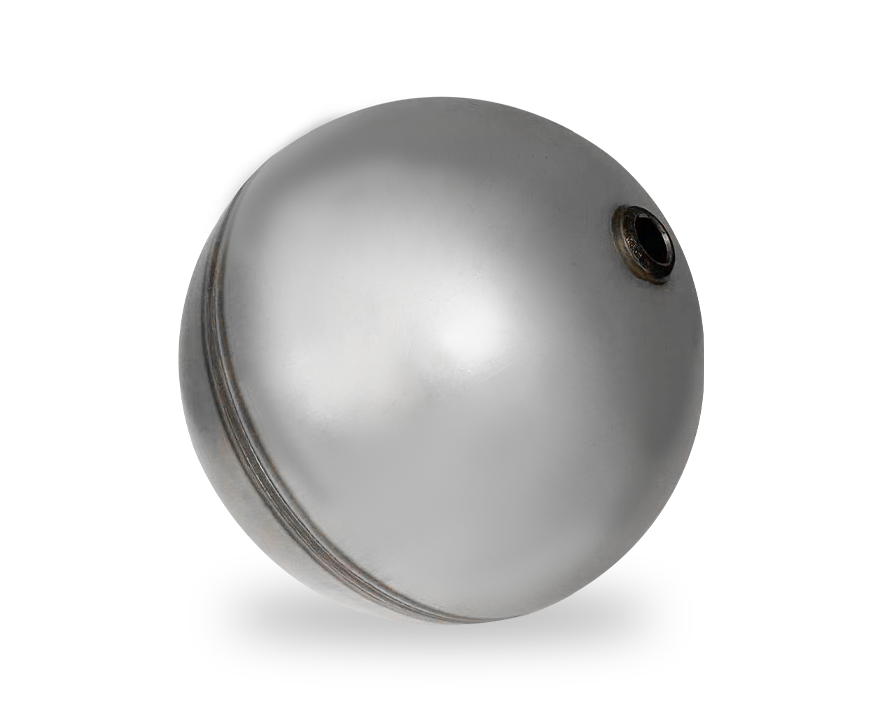
The Importance of Sealed Structure
The fundamental purpose of sealing in a stainless steel float ball is to prevent liquid or gas from entering the interior cavity. Any breach in the weld joint would allow fluid infiltration, significantly reducing buoyancy and rendering the float ball ineffective. Furthermore, compromised sealing can cause corrosion inside the cavity, pressure imbalance, and ultimately mechanical failure. The weld seam is typically the weak area of the float ball’s structure, making it the primary focus during quality inspection. For this reason, the welding method, heat input, and post-weld treatment are all carefully controlled to achieve full penetration without deformation or porosity.
Comparing Common Welding Techniques for Float Balls
Among the welding methods used in stainless steel float ball production, laser welding, TIG (Tungsten Inert Gas) welding, and resistance welding are prevalent. Each has distinct effects on sealing performance. Laser welding is favored for its precision and minimal heat distortion; it creates narrow, deep seams with good airtightness and smooth surface finishes. TIG welding, while more traditional, provides strong joints when performed by skilled operators, though it may result in slightly higher thermal stress. Resistance welding is suitable for thinner float balls, producing quick and clean joints, but sometimes lacks uniform penetration for thicker materials. The choice of welding technique depends on material thickness, diameter, and application requirements, as improper selection can cause microscopic leaks or mechanical stress points.
Heat Input and Material Distortion
One of the critical factors influencing sealing quality is the amount of heat applied during welding. Excessive heat can cause metal expansion and contraction, causing warping or microcracking along the seam. Conversely, insufficient heat results in incomplete fusion, creating hidden gaps that compromise airtightness. A precisely balanced heat input allows for strong metallurgical bonding without damaging the spherical geometry. Advanced factories employ automated welding machines with real-time temperature control and laser sensors to ensure consistent energy distribution. Additionally, preheating and controlled cooling are used to decrease internal stress, which could otherwise cause long-term distortion under operational pressures.
Surface Finish and Post-Weld Inspection
After welding, the float ball undergoes several finishing and testing stages to confirm sealing integrity. The welded seam is polished to remove burrs, discoloration, and potential stress concentrators that may later develop into cracks. Non-destructive testing methods, such as helium leak detection or ultrasonic inspection, are performed to identify invisible defects. Some Stainless Steel Float Ball Factory facilities also use water immersion testing to simulate real-world conditions and verify buoyancy stability. Post-weld cleaning and passivation further enhance corrosion resistance, ensuring the float ball’s surface remains smooth and chemically inert throughout its service life.
Our Main Products



Contact Us
* We assure you that we will never divulge your privacy.

Quick Links
Product
Head Office
Room 201, Building 5, Yongjia Yulong Shoes Clothing Technology Innovation Micro Park, Oubei Street, Yongjia County, Wenzhou City, Zhejiang Province
Phone: +86-577-67329891
Tel: + 86-13868641338 / 13858813335
Fax: + 86-577-67329892
E-mail: [email protected]
Copyright © Yongjia County Yaokang Technology Co., Ltd.
Stainless Steel Float Ball Manufacturer
